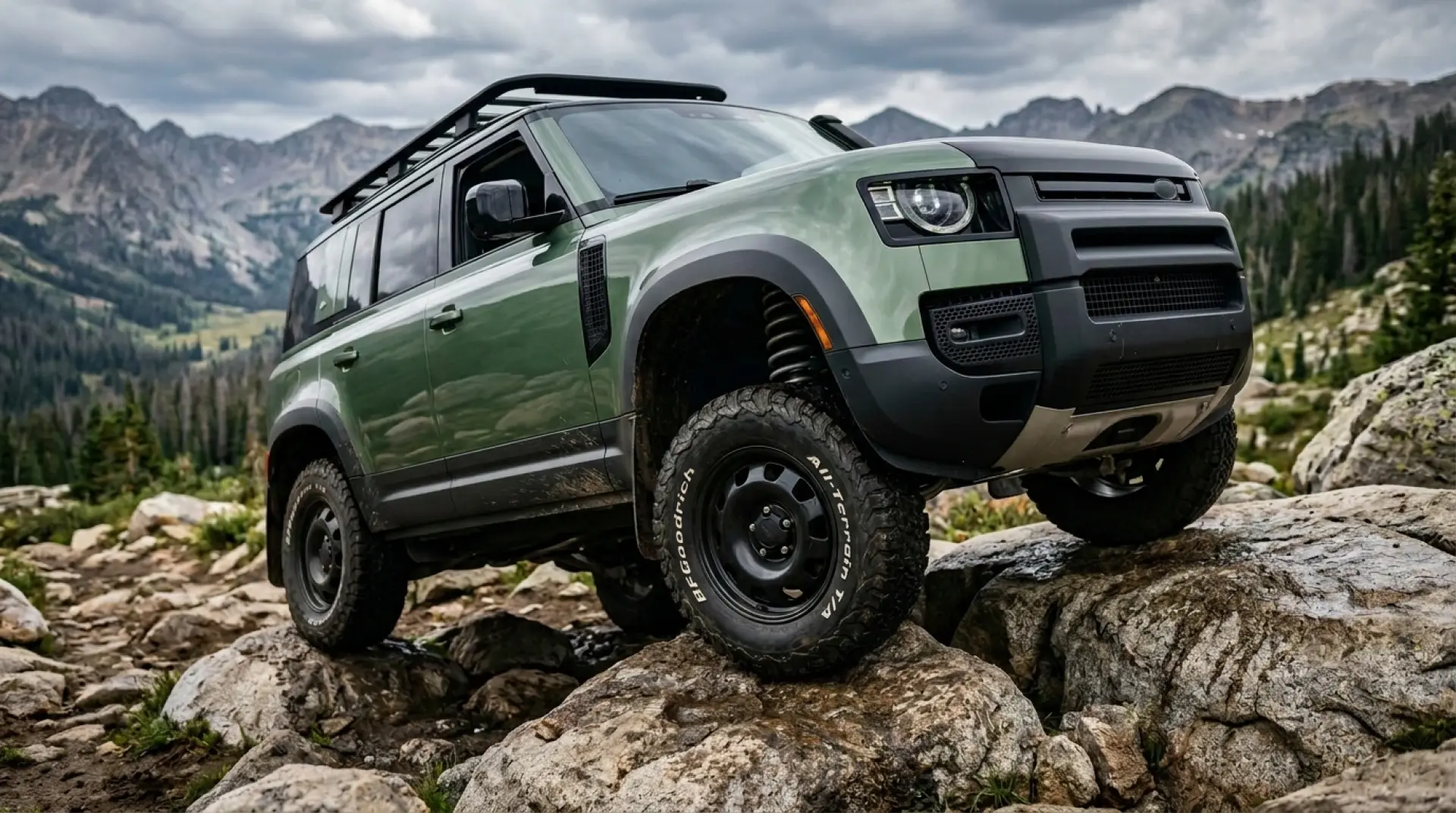
Changing Land Rover wheels affects more than appearance. Diameter, width, offset and load rating influence brake clearance, steering movement, tyre choice and how the vehicle feels with passengers, tools or a trailer aboard.
What this choice changes
Start with the wheel specification fitted to the vehicle, then decide what problem the new wheels need to solve. A work vehicle may need a tough, easy-clean finish; a touring vehicle may benefit from a wheel that gives more tyre sidewall; an appearance-led change still has to keep the tyre clear of suspension and bodywork.
How to choose the right option
Offset is the measurement that most often causes surprises. A wheel that sits too far outward can increase scrub radius and make tyres contact arches on lock, while a wheel that sits too far inward may foul brake or suspension components. Check PCD, centre bore, nut seat and brake clearance as a complete fitment set.
Fitment, safety and maintenance
Load rating deserves the same attention as style. Use the vehicle plate, axle limits and any regular loads to select wheels and tyres that are suitable for the heaviest realistic use, rather than choosing solely by the unladen vehicle weight.
A practical plan before you buy
Before ordering, compare a proposed wheel-and-tyre combination against the current set-up and allow for full steering lock and suspension travel. A professional fitment check is worthwhile after any significant change, especially where wider tyres or a lift are involved.
Questions to answer before choosing How to Choose Land Rover Wheels: Size, Offset and Load Rating
Good buying decisions start with a record of the vehicle, not a guess from its badge. Note the registration, VIN where available, model year, engine, factory options and any modifications already fitted. Then define the one job this Wheels purchase must perform, how often it will be used and the conditions it will meet. This keeps the search focused on compatible parts rather than an attractive but unsuitable listing.
A supplier can give better guidance when you can explain the current set-up, the intended use and the part or system being replaced. Photographs, measurements and the original part number are useful supporting evidence, especially on older Land Rovers or vehicles changed by a previous owner.
A practical buying checklist
- Confirm the exact vehicle specification before comparing alternatives.
- Check every interface: mounting points, electrical connectors, clearances, load limits and any associated parts.
- Allow for the complete job, including seals, fixings, fluids, wiring or tools where they are relevant.
- Read fitting instructions before ordering so that the work, safety precautions and follow-on checks are understood.
- Keep invoices, part references and installation notes with the vehicle record.
For a first purchase, keep the scope deliberately narrow and prove the basics before adding related accessories. The lowest initial price is only one part of value: an item that fits first time, can be maintained and supports the vehicle’s ordinary use is usually the more economical choice.
Fit, first use and follow-up checks
Trial-fit components before making irreversible changes, and do not force a part into place if holes, clips, plugs or lines do not align. Use the specified torque, routing and sealing approach where these apply. A short, controlled first-use check can reveal movement, rubbing, leaks, warning messages or unusual noises while they are still easy to correct.
Re-inspect the work after the first journey or working session, particularly where fasteners, straps, electrical connections or moving parts are involved. That final step turns a purchase into a dependable improvement rather than a component that has merely been fitted.
How to keep the decision proportionate
Start with the part that addresses the immediate need and reserve the budget for correct fitting, routine maintenance and the related parts that the job genuinely exposes. A Land Rover does not need every available accessory to become more useful. A considered choice should leave the vehicle easier to inspect, repair and use on the journeys it already makes.
Where fitment information is incomplete, pause and obtain a measurement, a part number or professional confirmation. Returning an unopened part is straightforward; making an unsuitable component fit can introduce damage, unreliable operation or an awkward future repair. The aim is a result that remains sensible when the vehicle’s use changes.
Budgeting for the complete result
Set the budget around the finished job rather than the headline component. The true cost may include delivery, mounting hardware, replacement clips, electrical protection, a specialist tool, alignment, coding, fluids or professional labour. Allowing for those items at the outset makes it easier to choose a durable option instead of a lower-priced part that cannot be installed or maintained properly.
Consider what the choice may prevent as well as what it adds. A well-matched Wheels part can protect another component, simplify routine use or reduce the likelihood of a repeat repair. That value is strongest when the part is used within its intended limits and checked as part of normal vehicle care.
Using part information well
Keep the listing details beside the vehicle information while making the final selection. Compare dimensions, connector shapes, mounting positions and any instructions line by line, and ask for help before opening or altering an item that does not clearly match. Clear information is particularly valuable where a Land Rover has several engine, axle, trim or equipment variants.
Once the work is complete, note the part reference, date and mileage or operating condition in the service record. This small habit makes later troubleshooting more efficient and gives the next owner a more useful history than a collection of unlabelled receipts. It also turns the research behind How to Choose Land Rover Wheels: Size, Offset and Load Rating into knowledge that can be used again.
What a successful result looks like
A successful Wheels choice feels proportionate to the Land Rover rather than exaggerated for the sake of appearance. It should perform the task it was bought for, work with the vehicle’s existing systems and remain straightforward to inspect, clean or service. If it introduces warning lights, obstructs access, creates a new noise or demands a workaround elsewhere, the fitment should be reconsidered.
Review the result against the original reason for researching How to Choose Land Rover Wheels: Size, Offset and Load Rating. If that need has been met without compromising safety, comfort or routine maintenance, the purchase has earned its place. This final comparison keeps future upgrades focused on genuine usefulness and avoids adding complexity simply because more products are available.
Latest data and context
DVSA data for April to June 2026 recorded road-wheel defects on 0.39% of Class 3 and 4 MOT tests, a useful reminder that condition, fixing and correct fitment matter as much as a new finish. Read the source.
Choose wheels around the Land Rover’s actual use, then confirm every measurement before placing an order.